After 70½, your IRA becomes the most tax-efficient charity vehicle you own.
A Qualified Charitable Distribution sends IRA dollars straight to a qualified charity — never touching your AGI. RMD is satisfied. No Schedule A required. Medicare IRMAA brackets stay quiet. Social Security taxability doesn't creep. Most 70½+ donors take the standard deduction, which makes the QCD the only deduction-substitute available to them at all.
70½+
Age trigger
$108K
2025 annual limit
AGI = 0
QCD excluded
IRMAA
Bracket creep avoided
Related on Kindle
The Baratelli Institute Kindle books for QCD donors
A QCD is available only to donors who have reached age 70½ by the date of the distribution. The RMD age is different (currently 73, scheduled to 75 in 2033). The QCD is available from 70½ even before RMDs are required.
Must be 70½ or older on the date of the QCD. If under 70½, this strategy is not available.
IRMAA, Social Security taxability, and bracket math all branch on filing status.
Pension, dividends, interest, taxable Social Security base, other taxable income — but not the RMD/IRA distribution we're modeling.
$
Used to compute the RMD via the Uniform Lifetime Table. SEP and SIMPLE IRAs also count; Roth IRAs do not.
$
Up to 85% of SS becomes taxable as AGI rises. The QCD vs. RMD-plus-donation choice can push this taxability threshold meaningfully.
$
SALT (capped $10K), mortgage interest, medical above 7.5% floor. Roughly 85% of 70½+ filers don't itemize at all because their other itemized stays below the standard deduction. If that's you, Path A's separate donation produces zero federal benefit.
$
If yes, each spouse has a separate $108K (2025) QCD limit. The combined household ceiling is $216K.
2025 QCD annual limit: $108,000 per donor. Inflation-adjusted under SECURE 2.0; verify the current-year figure with IRS before final execution. Spouses each have their own limit. A one-time up-to-$54,000 portion may be directed to a CRT, CRUT, or charitable gift annuity (CGA) under SECURE 2.0; that variant is not modeled here.
STAGE 2 OF 3
QCD intent
How much you intend to give from the IRA. The QCD must be a direct trustee-to-charity transfer — donor cannot receive the funds and then forward them. DAFs are not eligible QCD recipients; the gift must go to a 501(c)(3) operating charity.
Total intended IRA-to-charity distribution. Capped at $108,000 per donor for 2025. Counts toward RMD up to that amount.
$
QCDs can be split across multiple charities. Each must be an eligible recipient (operating charity, not a DAF or private foundation).
If donor needs to take more than RMD for living expenses, enter the additional amount. Doesn't change the QCD math directly but affects total AGI.
$
QCDs must go to a qualifying public charity. Donor-advised funds, private foundations (non-operating), supporting organizations, and split-interest trusts (other than the SECURE 2.0 one-time CRT/CGA exception) are not eligible.
STAGE 3 OF 3
Path comparison & results
Path A: take the RMD as taxable income, then donate separately and try to deduct it on Schedule A. Path B: use the QCD to satisfy the RMD without any AGI bump.
PATH-A VS. PATH-B DIFFERENTIAL
—
—
$—
QCD saves donor
RMD this year (Uniform Lifetime Table)
Two paths, side by side
Headline metrics
IRMAA Medicare bracket creep
2025 IRMAA tiers for MFJ (single thresholds are half). Path A pushes AGI up, often into a higher tier — adding hundreds or thousands per year to Medicare Part B + D premiums. Path B (QCD) holds AGI flat.
Social Security taxability
Above the provisional-income thresholds, up to 85% of SS benefits become taxable. The RMD-as-income path can push more SS into the 85% bucket. The QCD keeps SS taxability where it already was.
Show the full math
Step-by-step walk of both paths›
Recommendations
PAIRS WITH
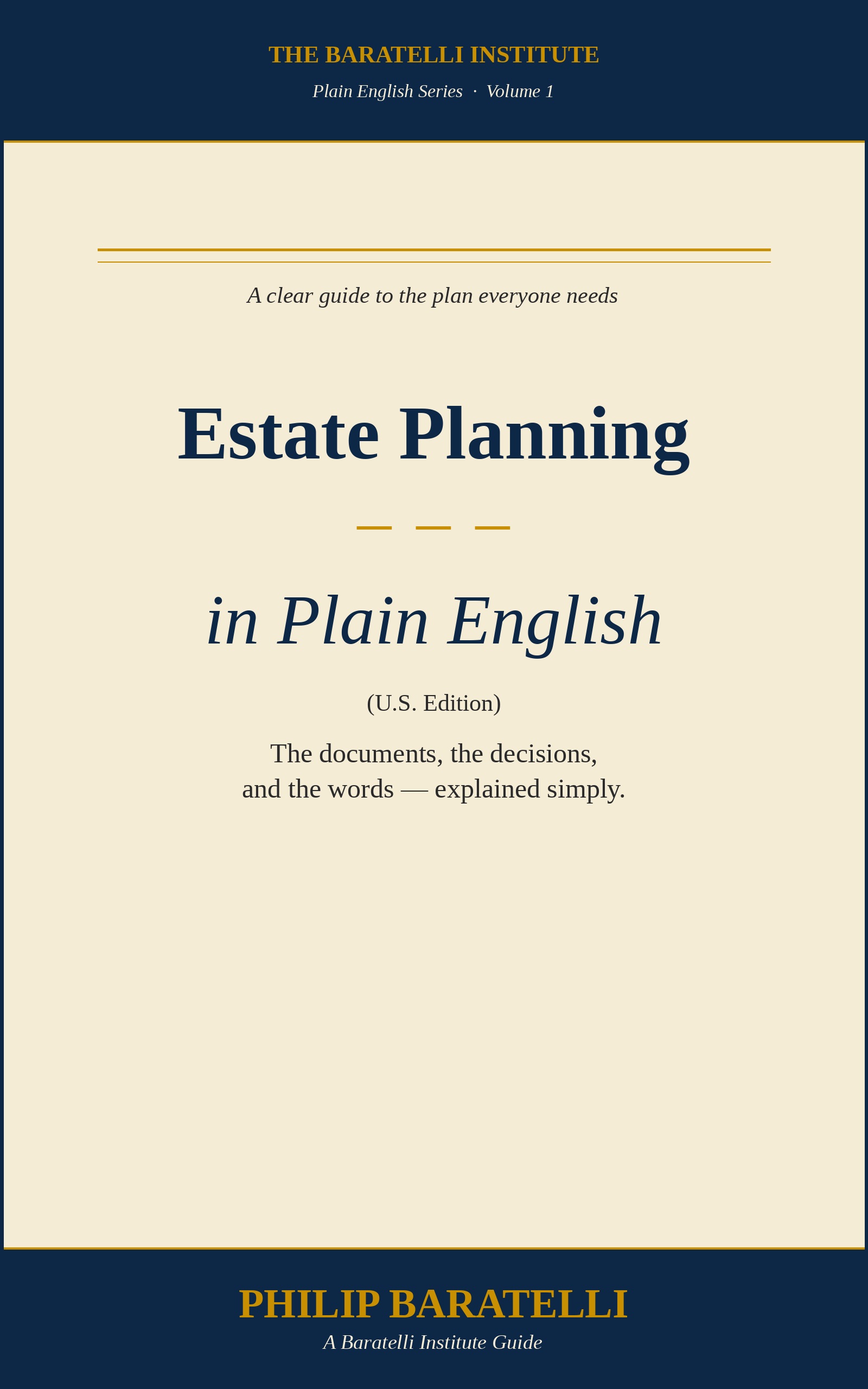
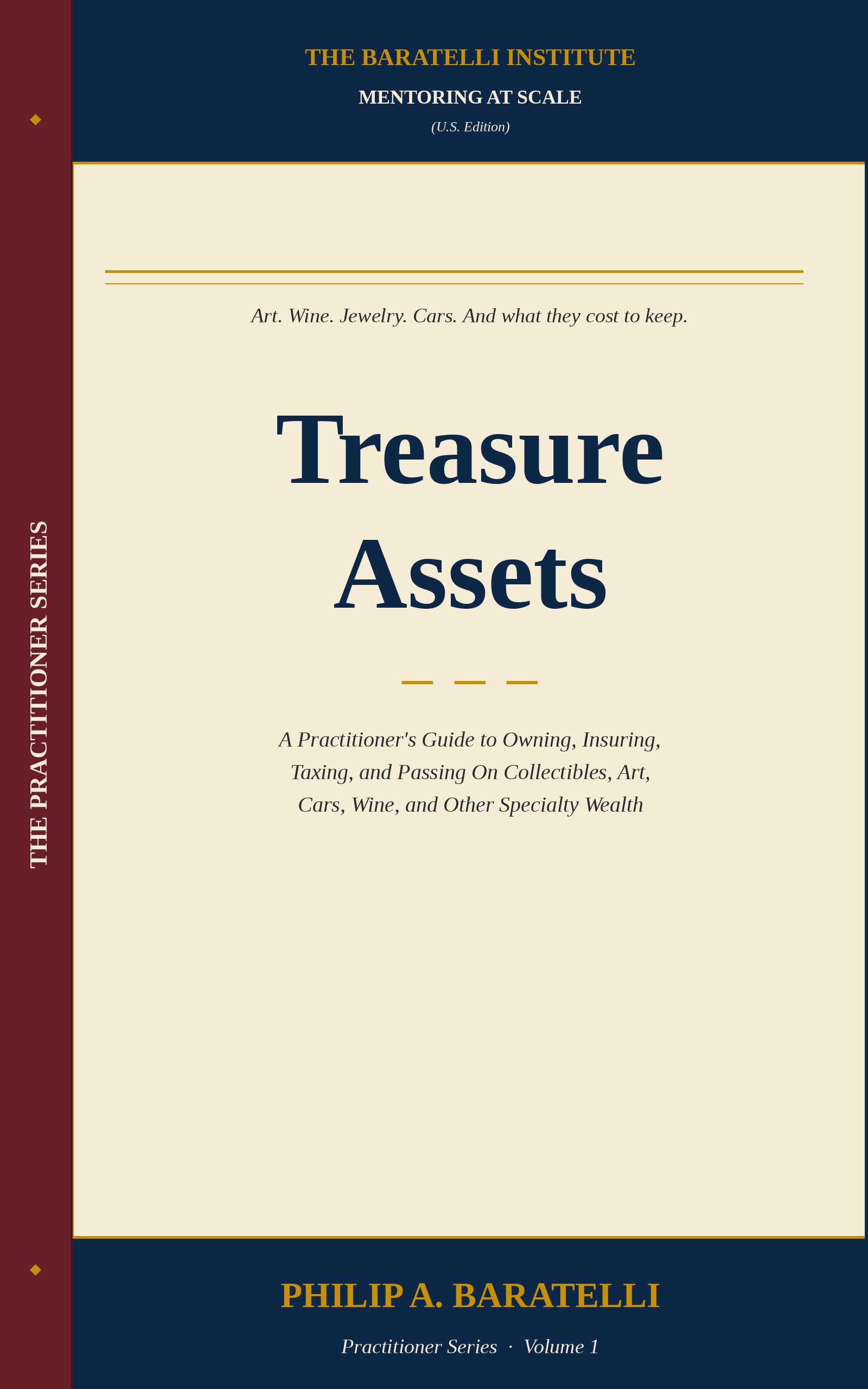
Family Office Guide & Estate Planning Decoded · Retirement-income coordination
The QCD is one piece of the broader 70½+ tax-efficiency stack: Roth conversion ladders before SS-and-RMD onset, the IRMAA two-year lookback, the SS provisional-income formula, and the IRA-to-spouse vs. IRA-to-charity-at-death decision (IRAs are arguably the worst asset to leave to children and the best to leave to charity, given the post-SECURE 10-year drain rule on inherited IRAs). Estate Planning Decoded walks through the full retirement-decumulation framework. Read the Family Office Guide →
HERE, TRY THESE. THEY MAY HELP.
No sign-up. No nurture sequence. Just the work.
The deeper retirement-decumulation and philanthropy material lives in the two companion guides. Both are free. Both are written for practitioners — donors and the planned-giving officers, attorneys, and CPAs who advise them.
Practitioner reference. This is not tax, legal, or financial advice. Consult your CPA or estate attorney for your specific situation. Tax rates, AGI limits, RMD ages, and IRMAA thresholds change annually — verify against current IRS publications before relying on any number. 2025 QCD limit shown as $108,000 per donor (SECURE 2.0 inflation-indexed; confirm current-year figure). RMDs computed via simplified Uniform Lifetime Table — actual divisor depends on age in the distribution year and IRS table updates. IRMAA tiers reflect 2025 Medicare brackets with the standard two-year lookback (premiums affected reflect MAGI two years prior). The QCD must be a direct trustee-to-charity transfer; donor cannot receive funds and then forward them.
WANT THE METHODOLOGY BEHIND THIS TOOL?
Read more in the Family Office Reference.
The tool gives you the answer. The guide gives you the argument — the case law, the worked examples, the negotiation playbook, the cross-check tables, the exception cases.
The methodology behind this calculator is in Estate Planning Decoded · QCD coordination of the reference guide.
 THE BARATELLI INSTITUTE
· Mentoring at Scale
THE BARATELLI INSTITUTE
· Mentoring at Scale