Historical Series
3 titles · The private empires that compounded American capital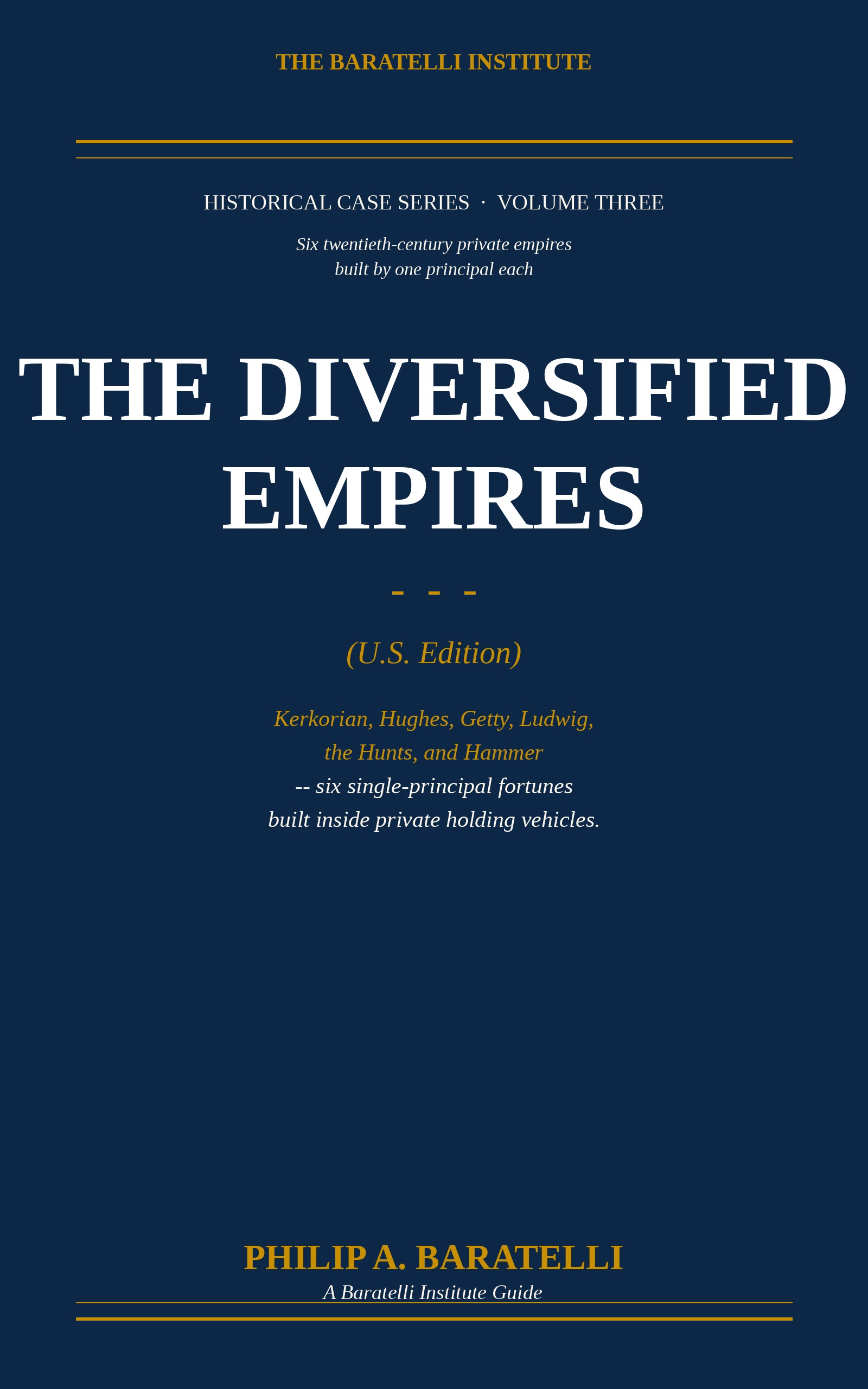
The Diversified Empires
Six Twentieth-Century Private Empires Built by One Principal Each — Kerkorian, Hughes, Getty, Ludwig, the Hunts, and Hammer
Six single-principal empires that ran across industries and continents in a way no modern corporation attempts. Kerkorian in casinos and airlines and studios; Hughes in aerospace, tools, and film; Getty in oil and art; Ludwig in shipping and the Amazon; the Hunts in oil, silver, and cattle; Hammer in oil, art, and Soviet trade. Six chapters, one thesis: the diversified private empire is a category, not a curiosity.
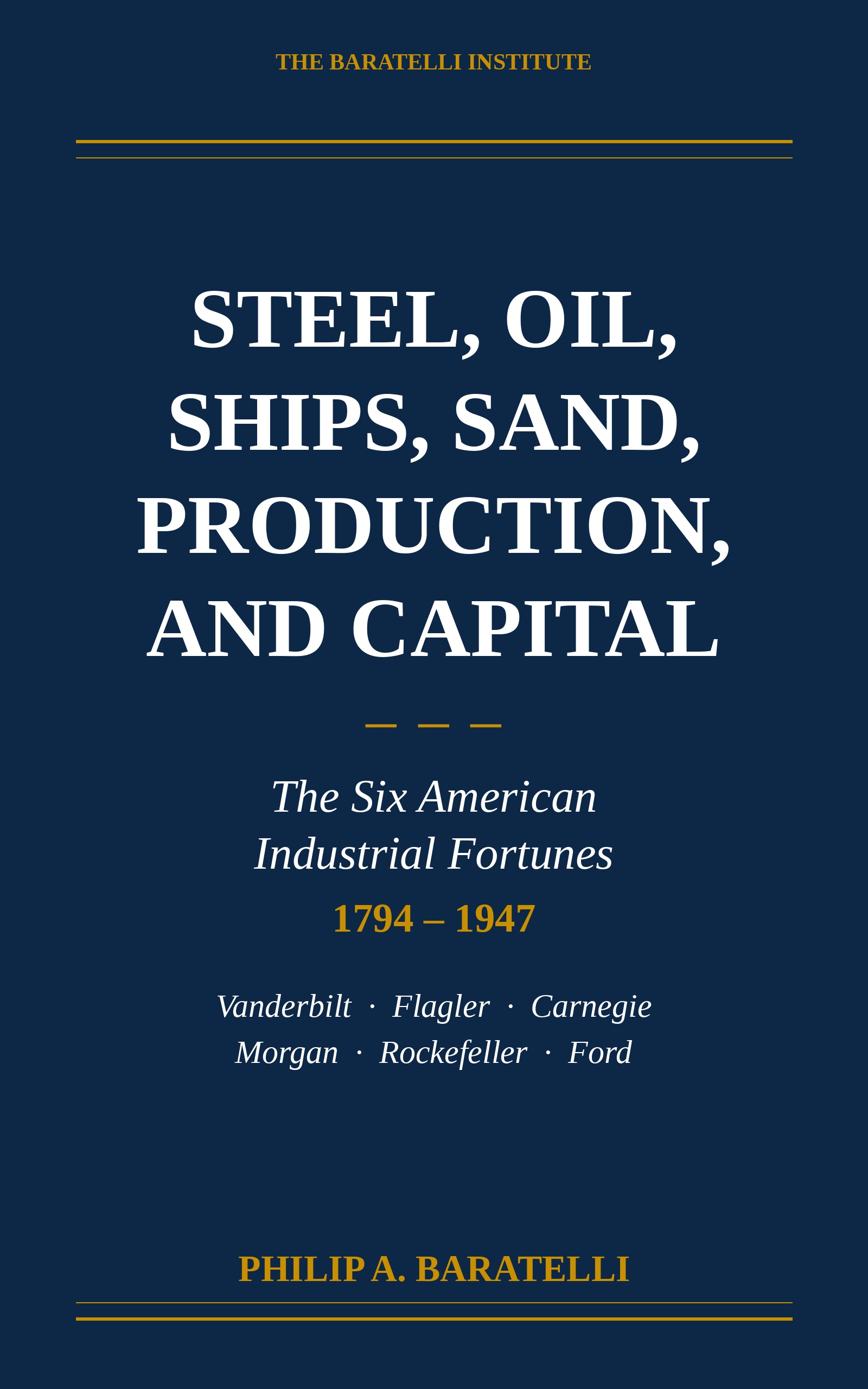
Steel, Oil, Ships, Sand, Production, and Capital
The Six American Industrial Fortunes, 1794–1947
The six industrial fortunes that laid the American capital stack. Astor in fur and Manhattan land; Vanderbilt in ships and rails; Carnegie in steel; Rockefeller in oil; Ford in production; Mellon in capital itself. One hundred fifty years, six industries, six family arcs — and the practitioner-grade capital-allocation lessons that carried into the twentieth century.
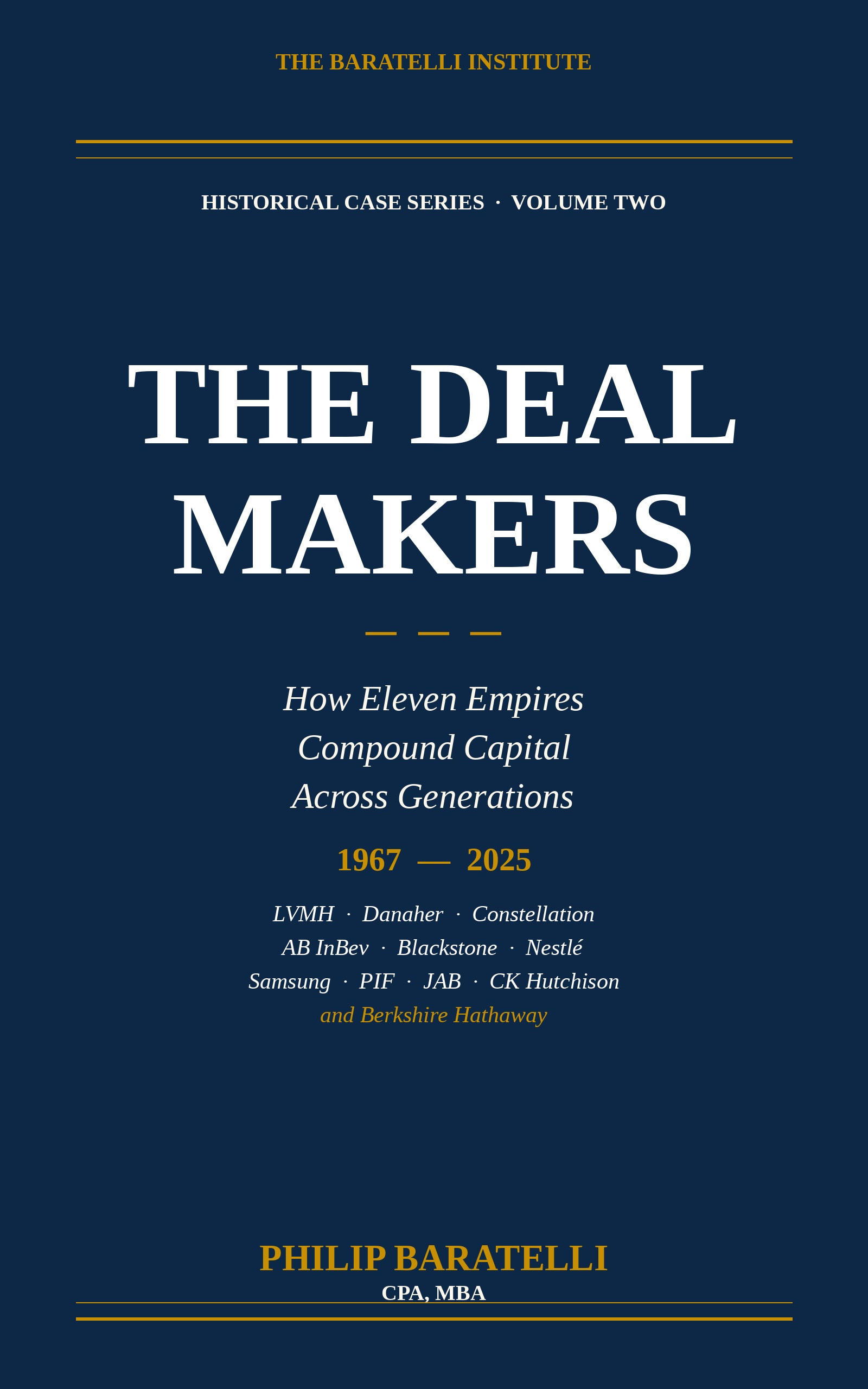
The Deal Makers
How Eleven Empires Compound Capital Across Generations
Eleven multi-generational dynasties — how they built, how they compounded, and how the second and third generations kept it together (or didn’t). The practitioner reference for family capital: the trust architectures, the operating cadence, the succession playbooks. Paired with The Diversified Empires and Steel, Oil, Ships, this is the Institute’s definitive shelf on how American private wealth actually compounds.

American Industrial Mobilization
The Production War and the Peacetime Boom, 1940–1964
The Institute’s first period-focused historical volume. How American industry converted from consumer goods to war production in 60 months and out-produced the combined Axis by 2:1 — then how the same industrial base pivoted to the twenty-year peacetime boom that built the postwar American economy. Kaiser at Richmond; Higgins at New Orleans; Ford at Willow Run; Chrysler at Detroit; Boeing, Douglas, Lockheed, North American, Grumman, Bethlehem, Studebaker, and 25,000 other American manufacturers coordinated under William Knudsen’s operating philosophy — accuracy before speed — that predated Toyota, Deming, and Danaher by forty years.
Practitioner Series
1 title · Specialty wealth categories, in the reader’s hands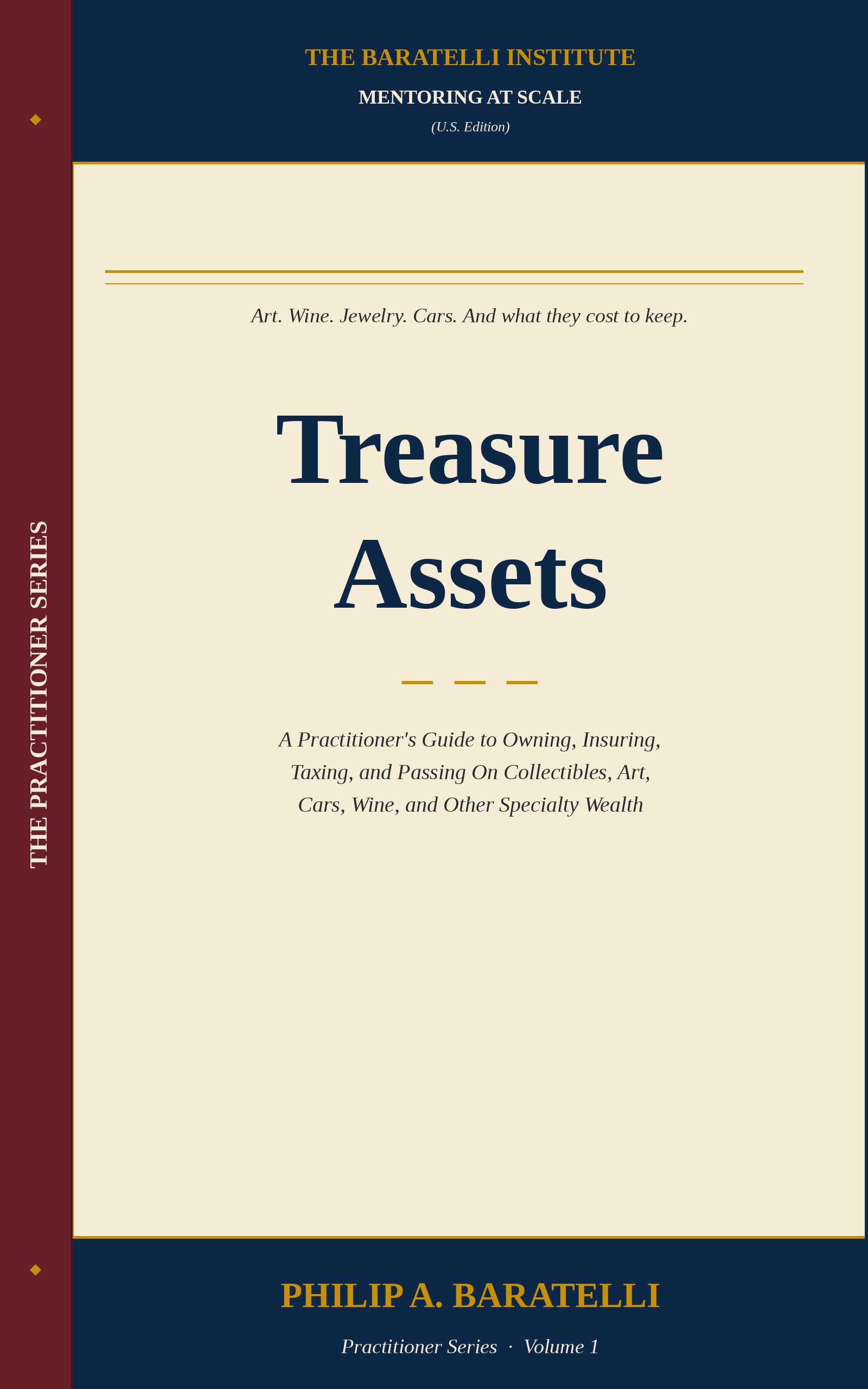
Treasure Assets
A Practitioner’s Guide to Owning, Insuring, Taxing, and Passing On Collectibles, Art, Cars, Wine, and Other Specialty Wealth (U.S. Edition)
The practitioner reference for the wealth categories that don’t fit on a Schwab statement. Art, collectibles, classic cars, wine, jewelry, watches, whiskey, gold, guns, rare books, memorabilia. How to own, insure, tax, appraise, and pass on assets whose value is imperfectly liquid and imperfectly quoted — written for family-office CFOs, principals, and the advisor pack that supports them.
Frontier Series
1 title · American change at the edges
Gentrifying Small Towns
A Practitioner’s Guide to Small-Town Change — for Mayors, Planners, Business Owners, Developers, and the People Who Live There (U.S. Edition)
Small-town change treated as a category, not a headline. What happens to the storefronts, the school district, the property tax base, the local labor market, and the long-time residents when capital arrives. Written for the mayor, the planning-board volunteer, the local business owner, the arriving developer, and the resident whose block is changing under them — neutral, source-cited, useful to every side of the table.
Operations Series
1 title · Running the facility, not just financing it
Running an Attraction
A Field Manual for Anyone Running a Facility with a Front Gate
The operations reference for zoos, aquariums, museums, amusement parks, botanical gardens, sports stadia, and every venue where the day begins with a gate opening. Attendance forecasting, staffing shifts, food-and-beverage margin, gift-shop mix, insurance and risk, capital renewal, membership economics, and the operating rhythm of a business that lives or dies on turnstiles. Written from the field, for the field.
Plain English Series
1 title · The essential conversation, without a law degree
Estate Planning in Plain English (U.S. Edition)
A Baratelli Institute Guide — What the plan is, what happens if you do nothing, and exactly what to put in place, without a law degree
The estate-planning conversation, translated. What the will actually does, what a revocable trust actually does, what happens if you die without either, and exactly what to put in place — without the acronyms, without the sell, without the law-school vocabulary. Written for the first-time estate planner, the parent of young children, the recently-single, and the reader who has been meaning to get this done for ten years.