 THE BARATELLI INSTITUTE
· Mentoring at Scale
THE BARATELLI INSTITUTE
· Mentoring at Scale
THE BARATELLI INSTITUTE
· Mentoring at Scale
THE BARATELLI INSTITUTE
· Mentoring at Scale
"Money doesn't buy happiness — I don't believe that for a second. Money cures a lot of problems, but it creates an enormous amount of different problems."
Once financial needs are met, decisions and lifestyle are no longer money-driven; they are psychology-driven. The wealth-creator's rags-to-riches story is rarely shared by the next generation in the way the founder built it. 70% of wealthy families lose their fortune by the second generation, 90% by the third — shirtsleeves to shirtsleeves in three generations. Wealth Psychology is the reference for the practitioner having the underneath conversation: the founder afraid to retire, the next-gen who hasn't been told what's coming, the spouse who manages the household but doesn't know the trust structure, the recent widow facing the first joint return alone, the grandchild far enough from the founding to no longer share the willingness to sacrifice. The Pack is what prevents the third-generation slide. Written with input from a clinical psychologist who specializes in HNW families.
The guide is written for the actual professionals who do this work — and the people who serve them. Each section contains material that will be useful to multiple audiences, but the persona-routing table below tells you where to start.
| You are… | Start with these chapters |
|---|---|
| Family-office principal facilitating family meetings | Ch 4 Family Money Dynamics · Ch 6 Governance as Psychology · Ch 5 Next-Generation Preparation · Ch 12 The Long Game |
| Wealth advisor having the difficult call | Ch 3 Advisor-Principal Dynamics · Ch 2 Behavioral Biases · Ch 8 Crisis, Loss & Behavioral Response · Ch 7 Decision-Making Frameworks |
| Estate attorney advising a reluctant founder | Ch 9 The First Generation’s Inheritance Problem · Ch 6 Governance as Psychology · Ch 10 The Second Generation’s Choice |
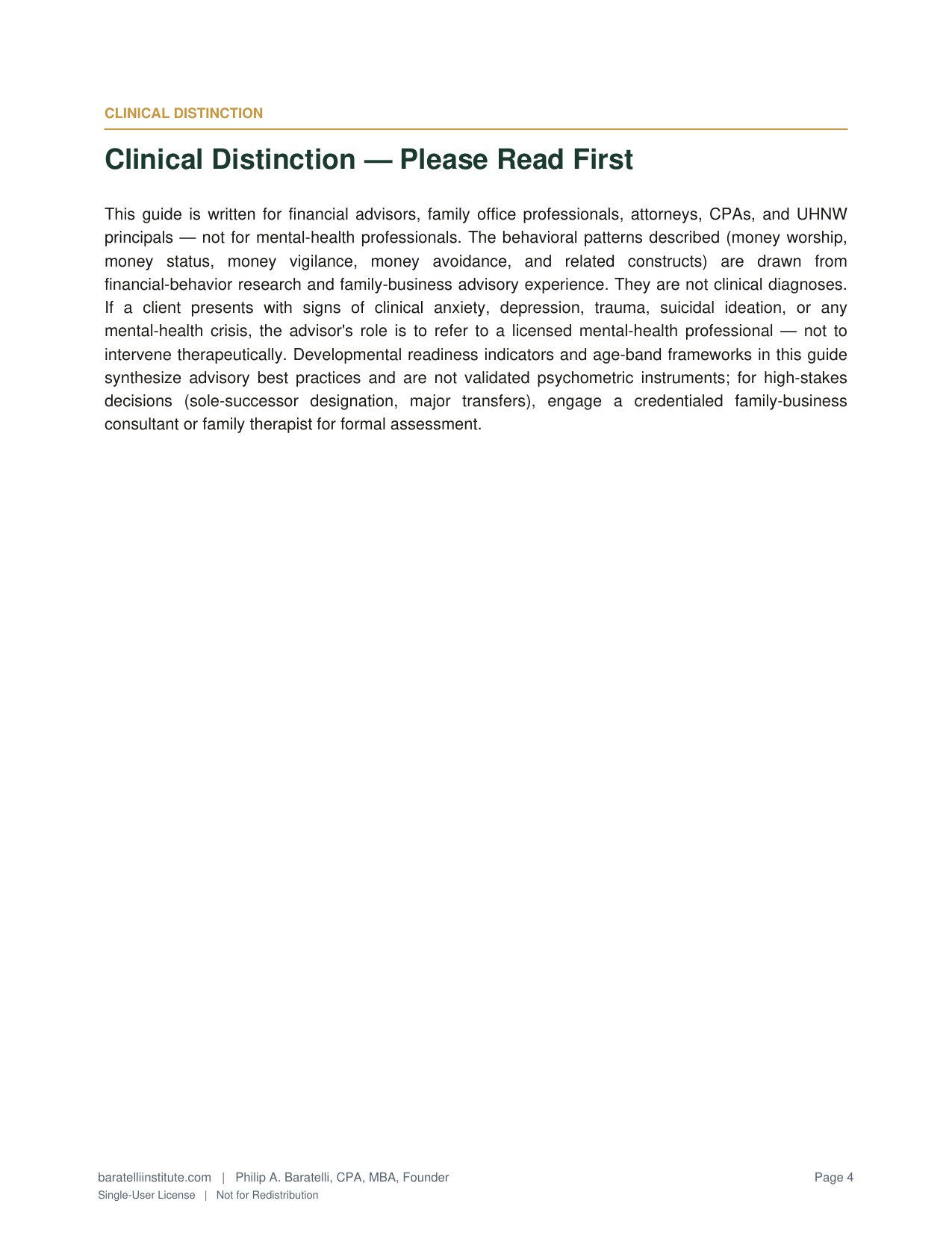
| Therapist or coach working with a HNW family | Read front-to-back, but read the Clinical Distinction section first — it sets the referral boundary this guide operates inside. The financial references throughout are the vocabulary; the psychological architecture should already be your first language. |
| Founder thinking about what comes after | Ch 1 The Psychology of Wealth · Ch 9 The First Generation’s Inheritance Problem · Ch 12 The Long Game |
Page numbers are from the delivered 2026 edition.
Sample pages from the actual guide — cover, table of contents, persona routing, sample chapter openers, and back matter. These are the actual pages that ship; not marketing renders.
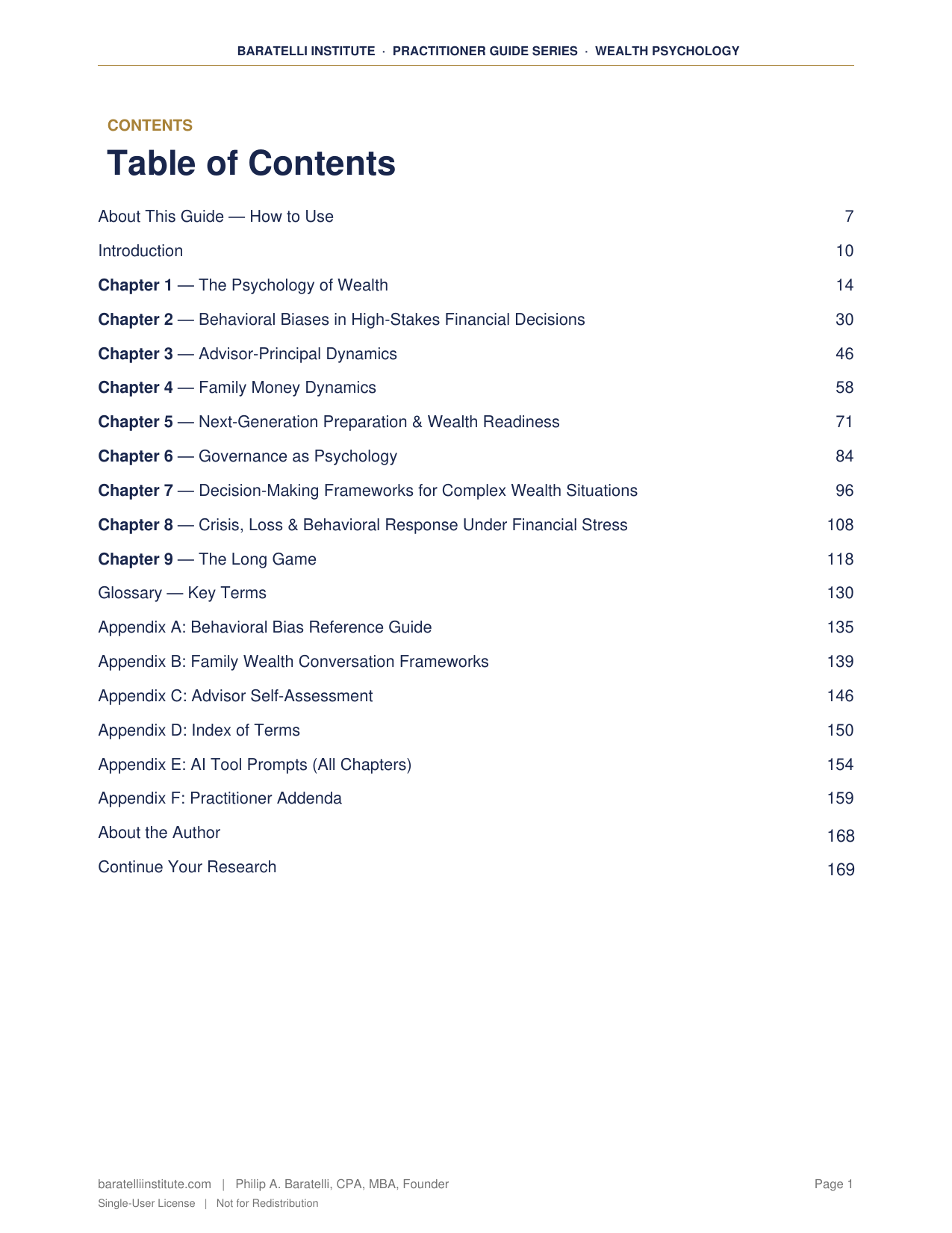
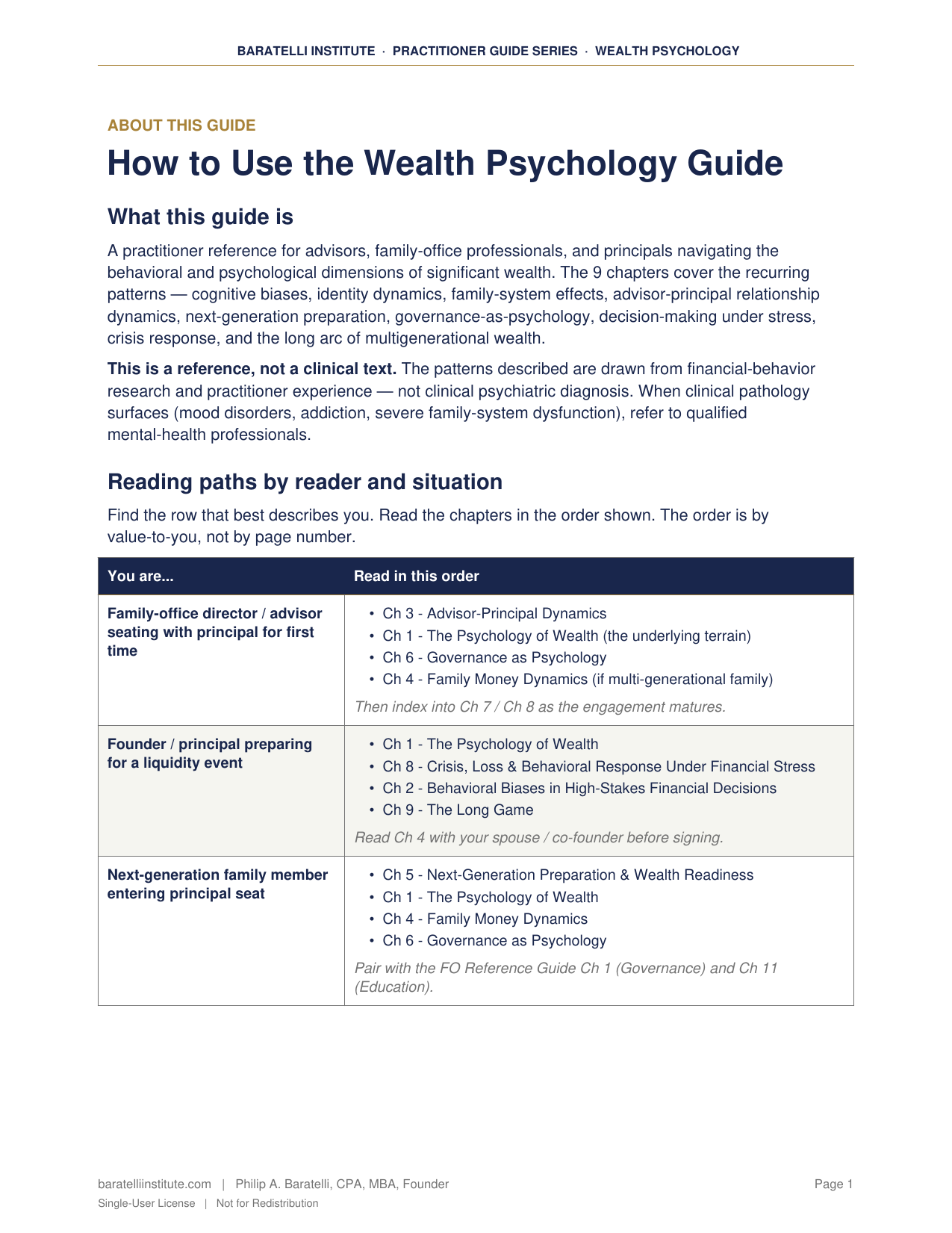
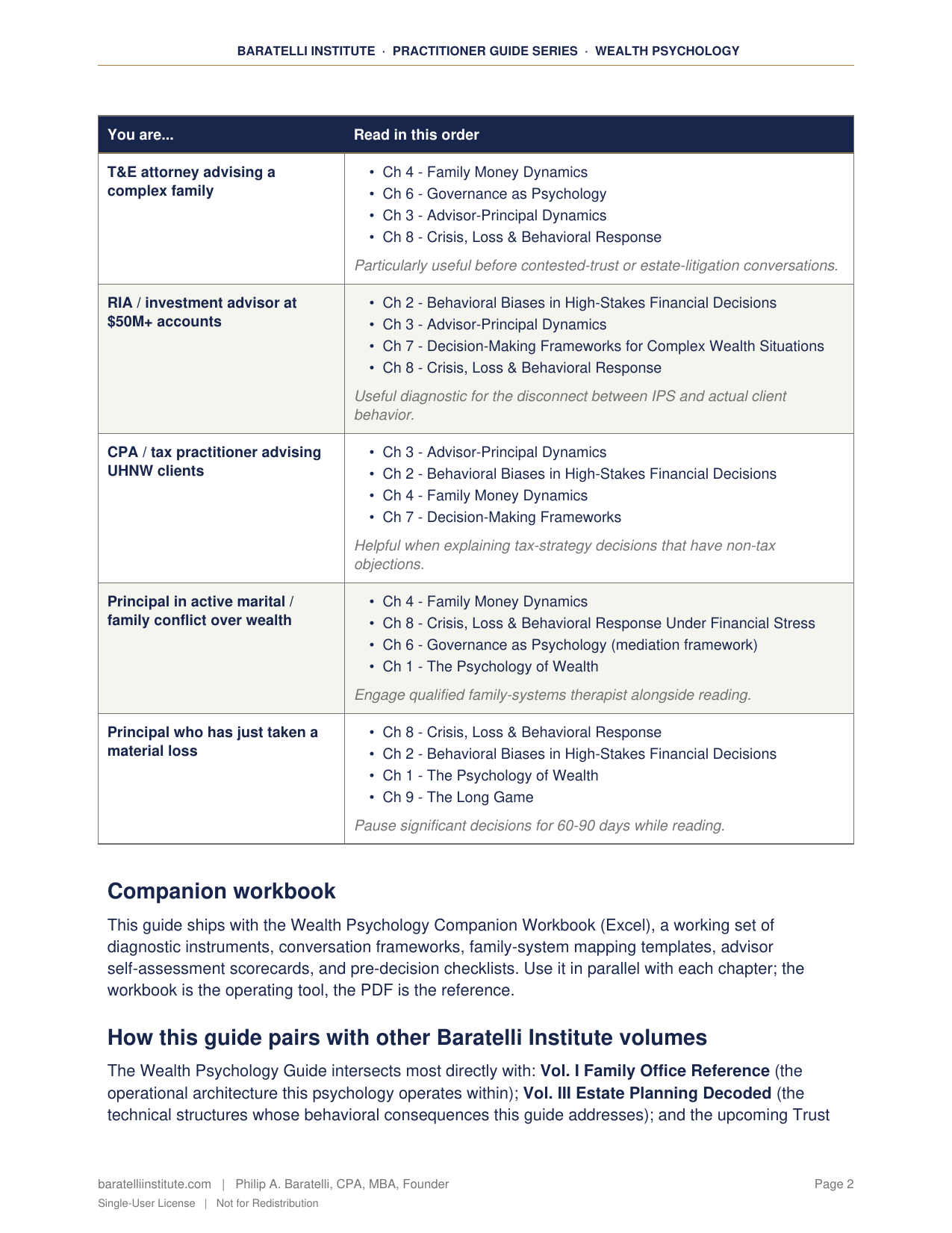
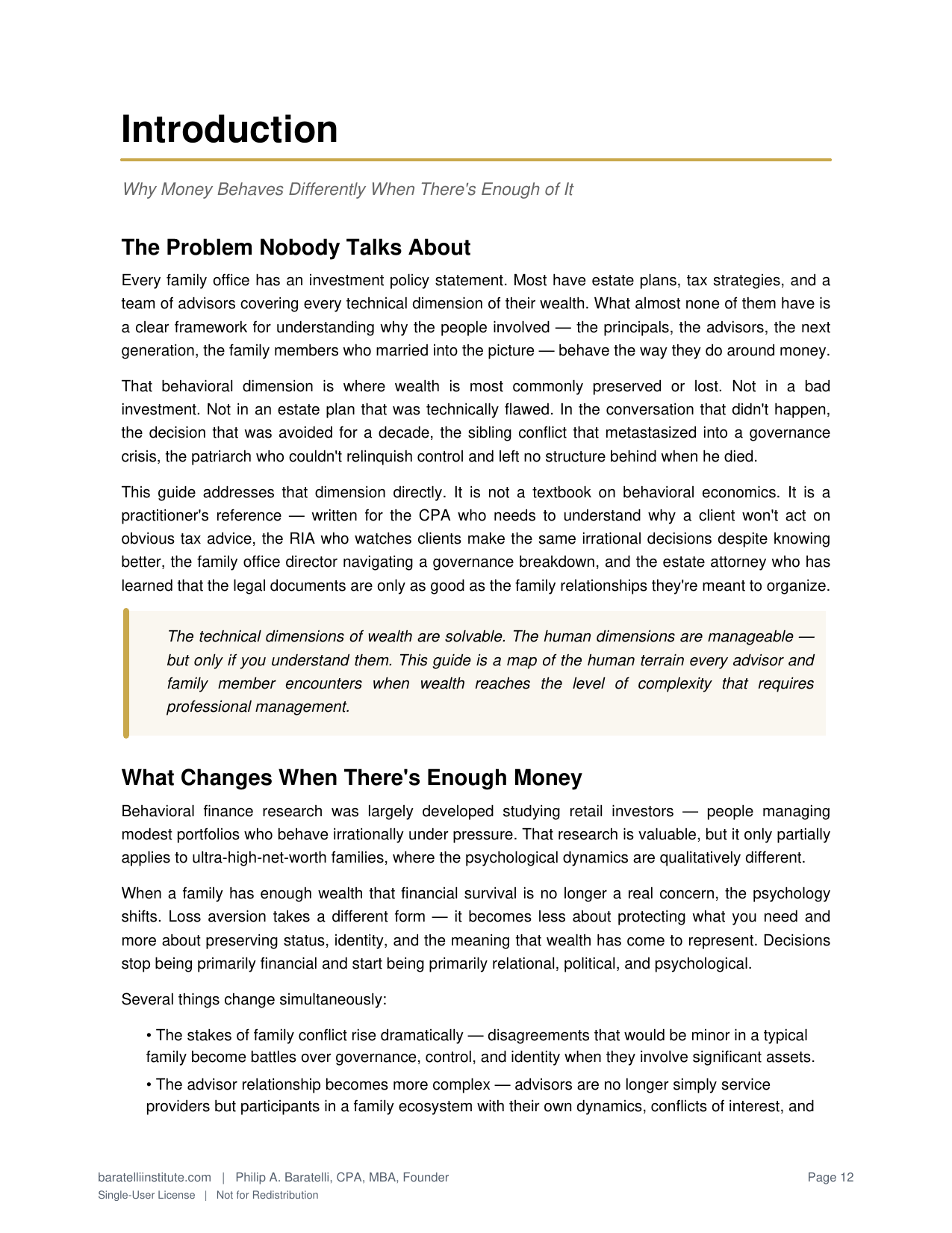
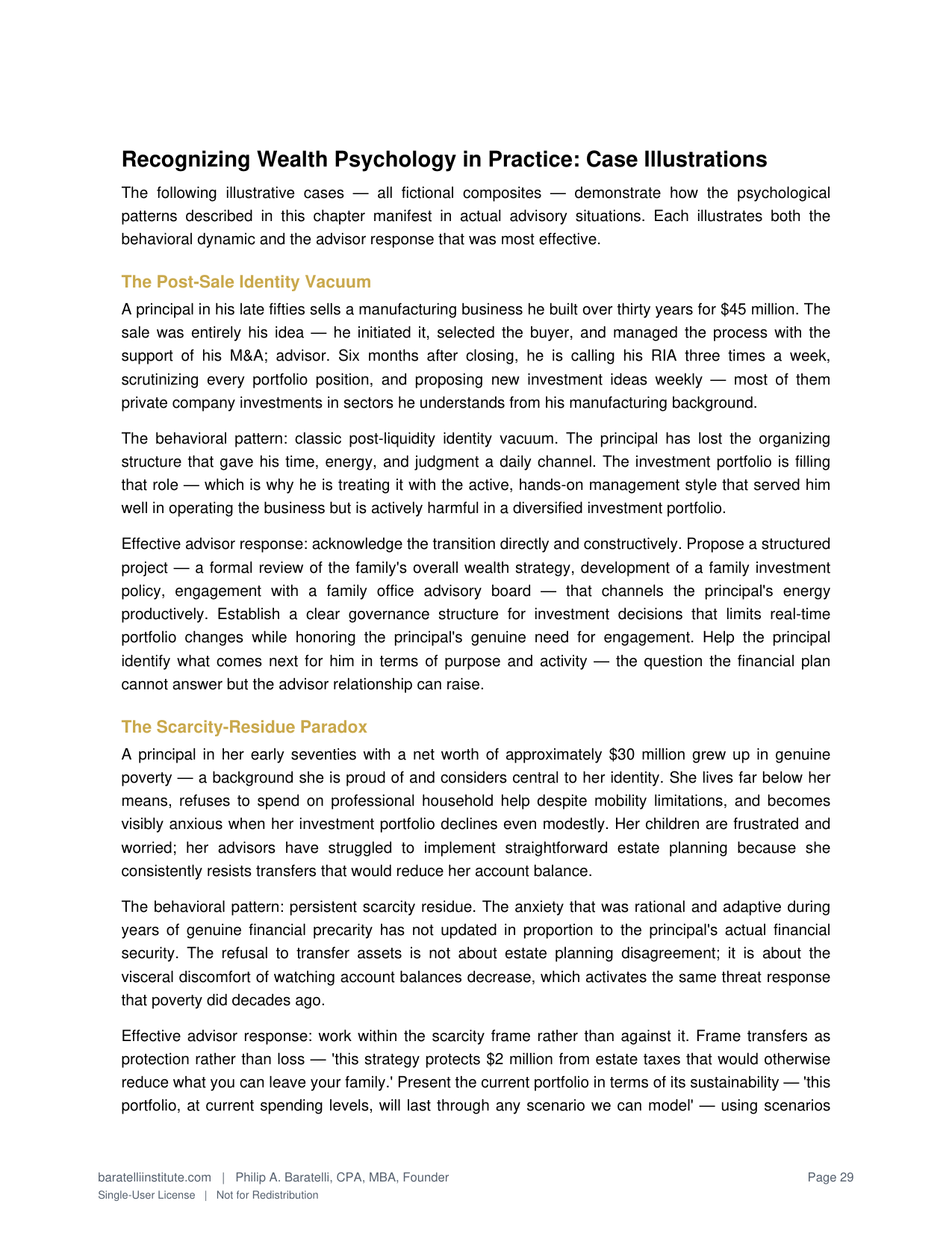
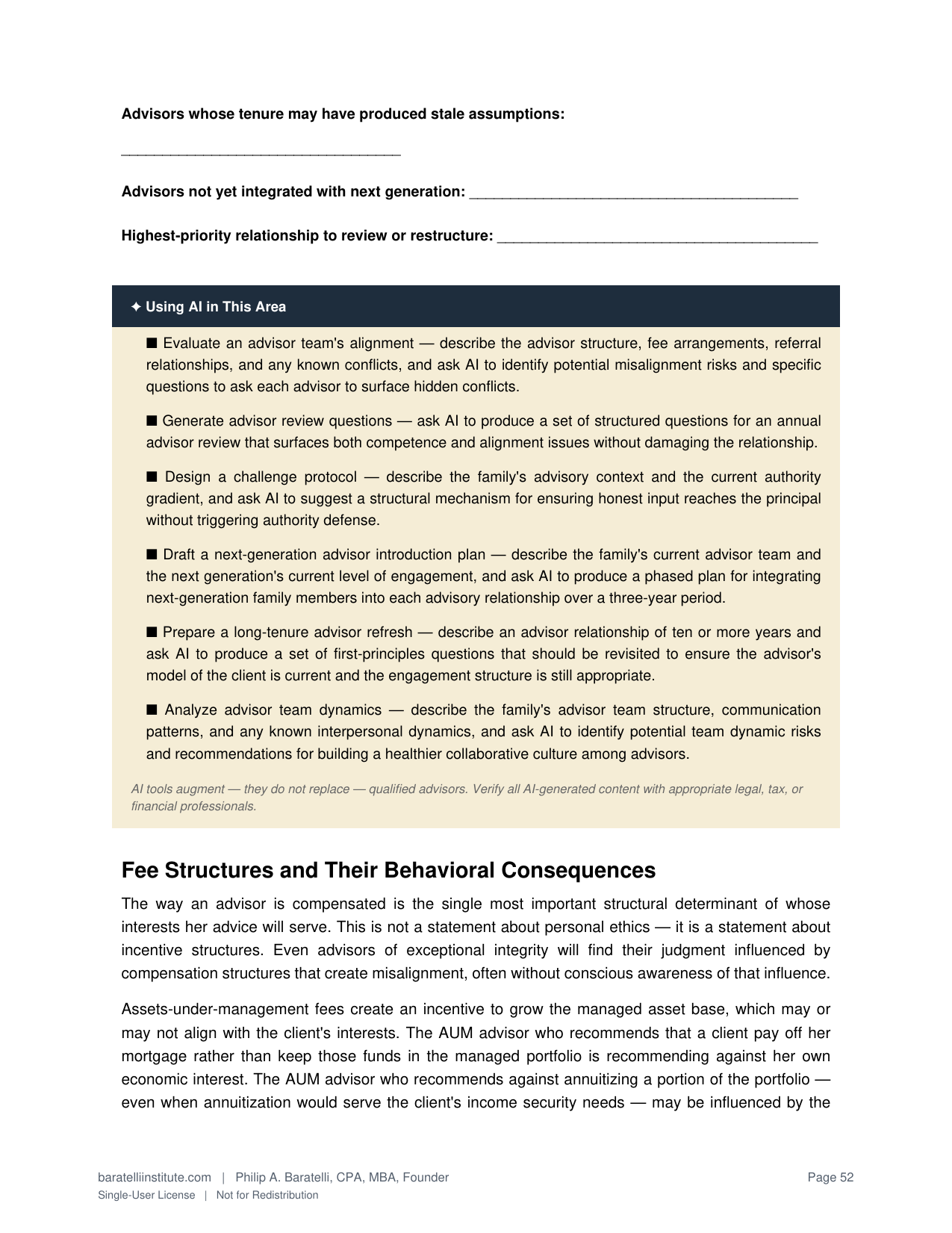
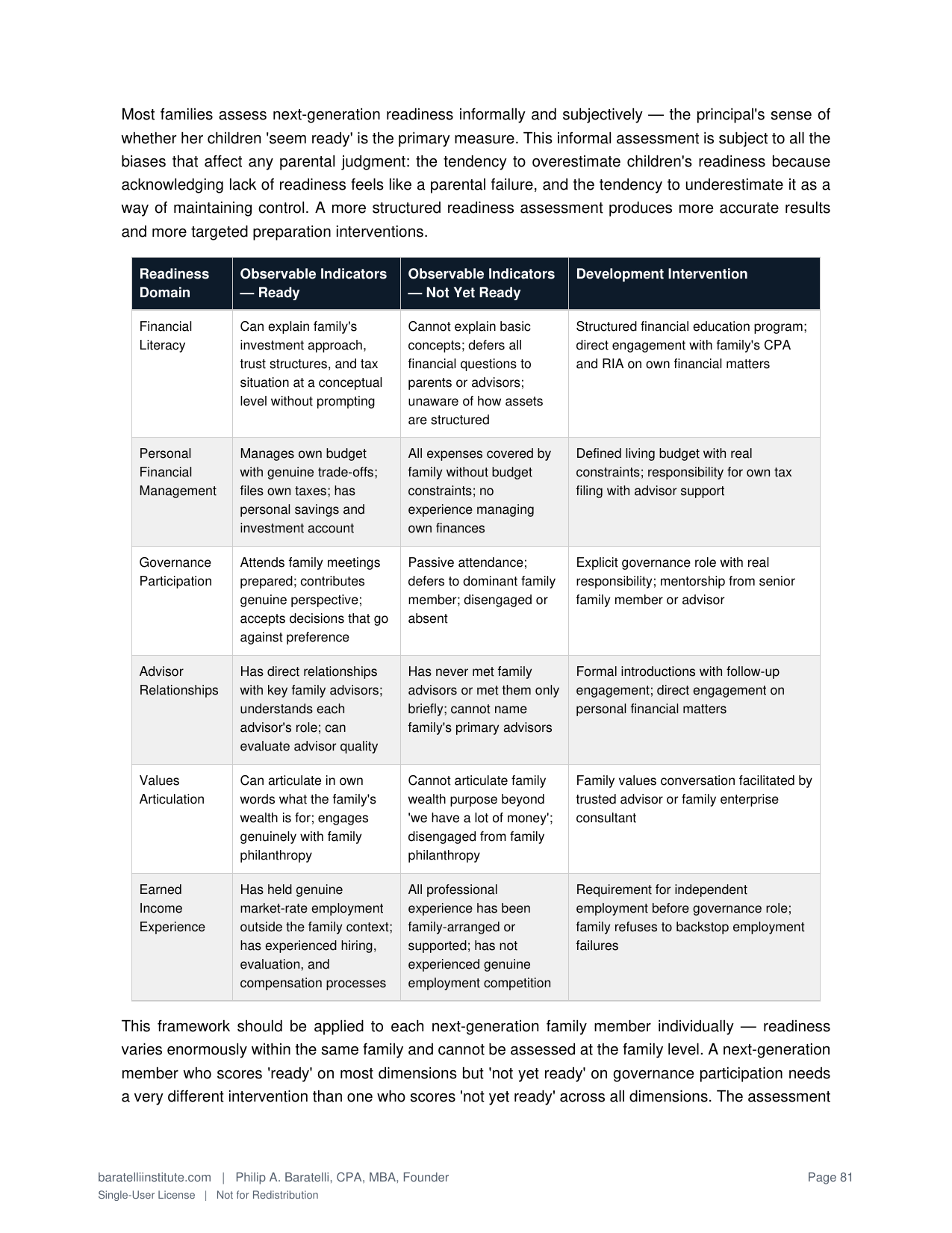
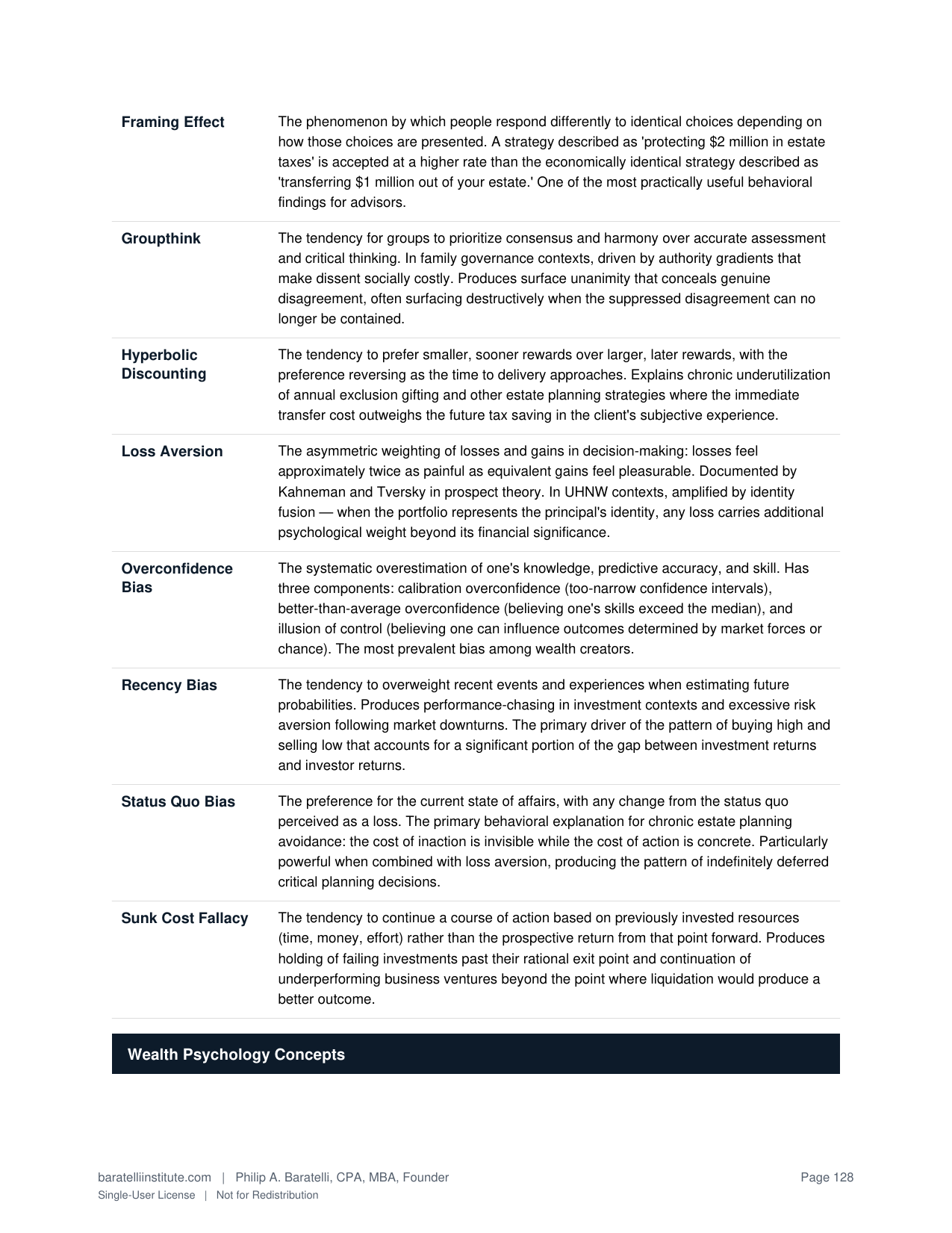
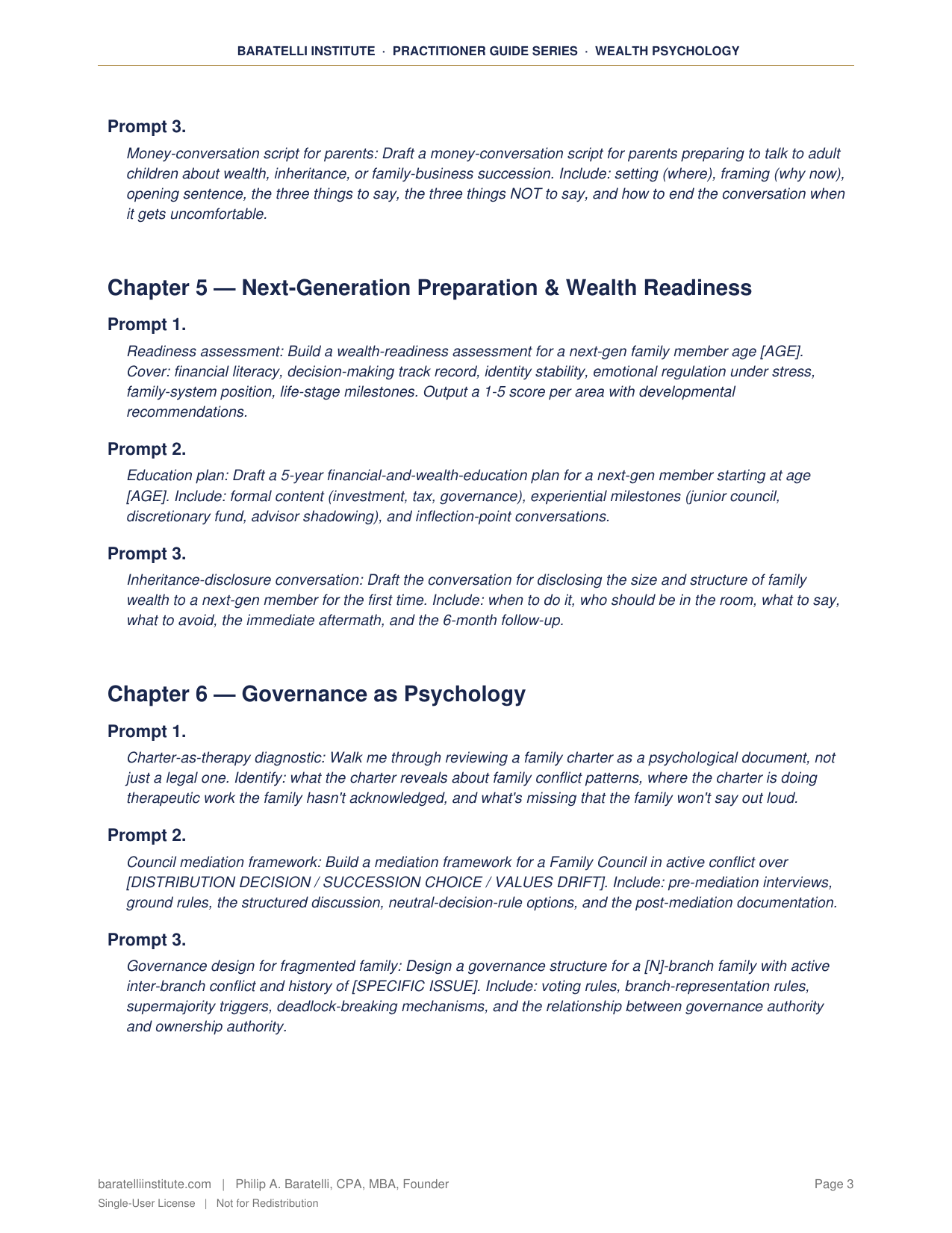
221 pages. Twelve chapters, front matter that sets the clinical boundary, and practitioner back matter — Behavioral-Bias Quick Reference, Difficult Conversations Library, Advisor-Side Biases Addendum, Practitioner Discipline Addenda, Sources & Citations, Glossary, and a page-referenced Index of Terms. Searchable, hyperlinked TOC and index. Single-user license.
Eleven tabs, nine working instruments: Bias Inventory, Advisor-Client Dynamics, Client Risk Profile, Decision Framework, Family Money Dynamics, Next-Gen Preparation, Crisis Response, Advisor Self-Assessment, and Wealth Identity.
Free interactive tools at tools.baratelliinstitute.com run the math from the guide on your scenario. No purchase required.
Want every guide always current + the Brief paid layer + monthly office hours?