"Nothing had to be created from scratch. Just stabilized and repurposed."
America's forgotten small towns are not greenfield problems waiting for new construction. They are existing inventory — courthouse-square Main Streets with utilities, streets, schools, hospitals, and walkable residential already in place, surrounding boarded-up commercial buildings that can be acquired for a fraction of new-construction cost. The reference for the civic CFO running the town's finances, the mayor making the announcement, the developer betting capital on the next 10 years, and the family-office principal whose donor gift is going to anchor a new arts district. Bentonville. Greenville. Boise. Asheville. Bozeman. Five towns that decided to become destination towns and got it mostly right. Five hundred others tried and got it wrong. Written from the financial side, not the policy-debate side.
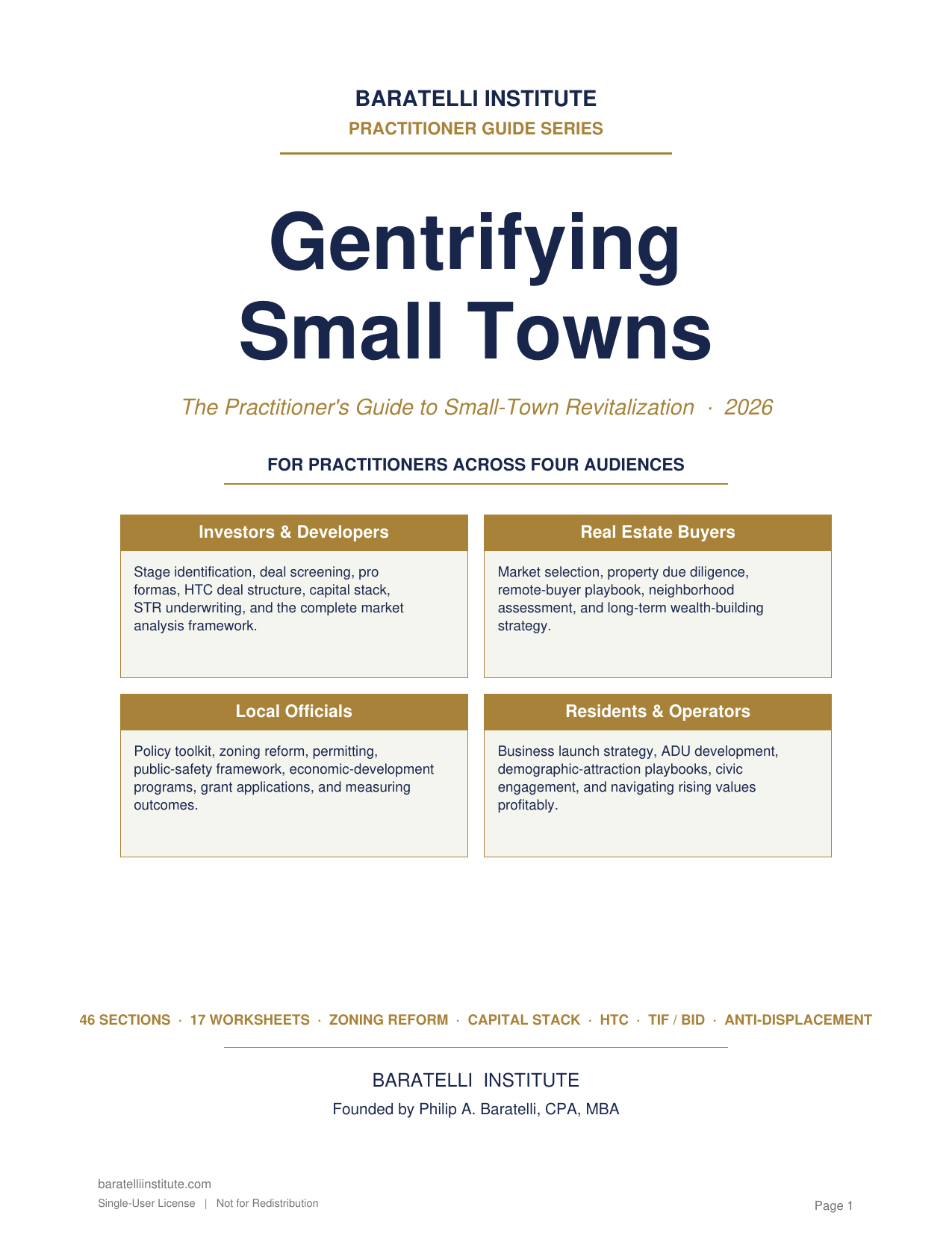
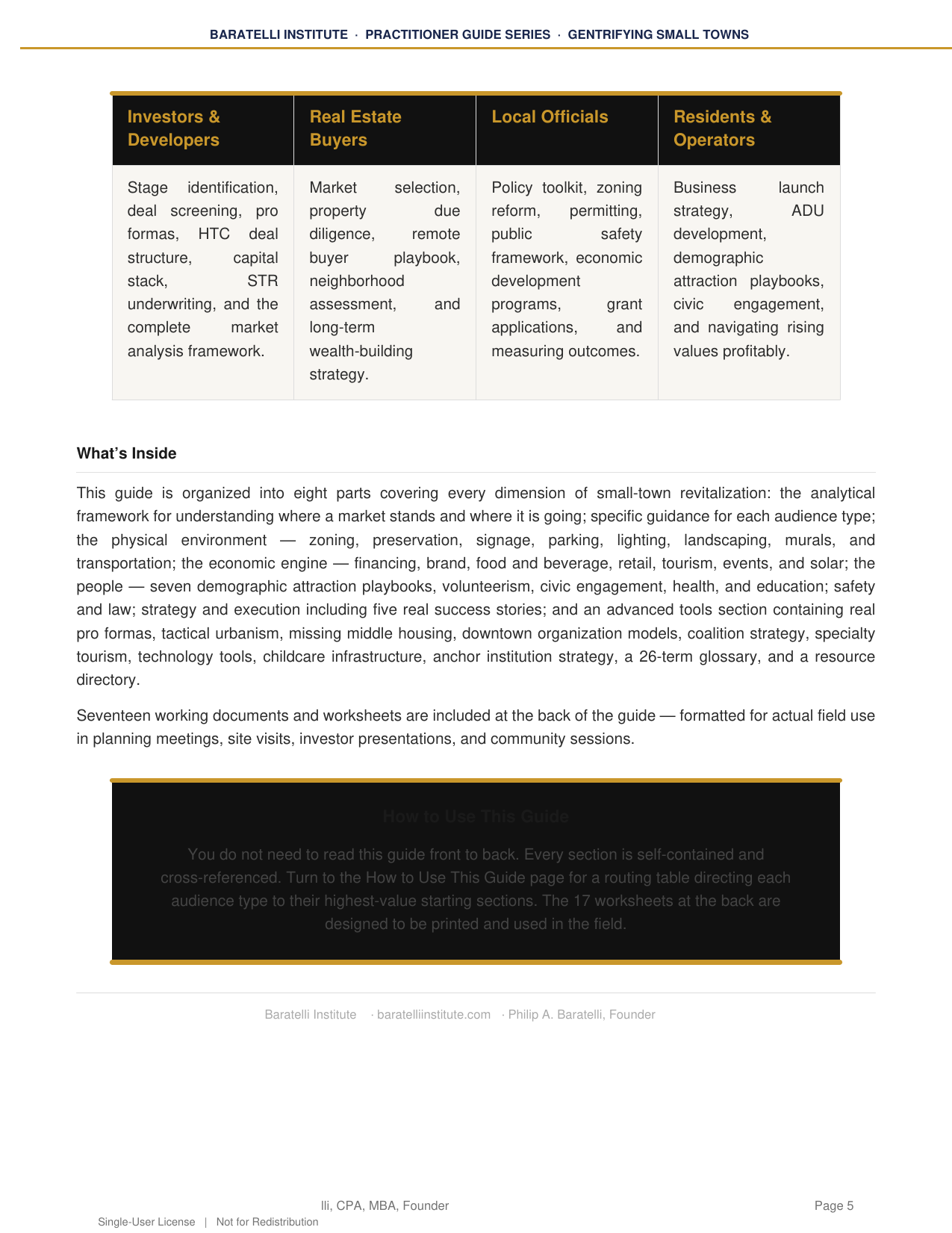
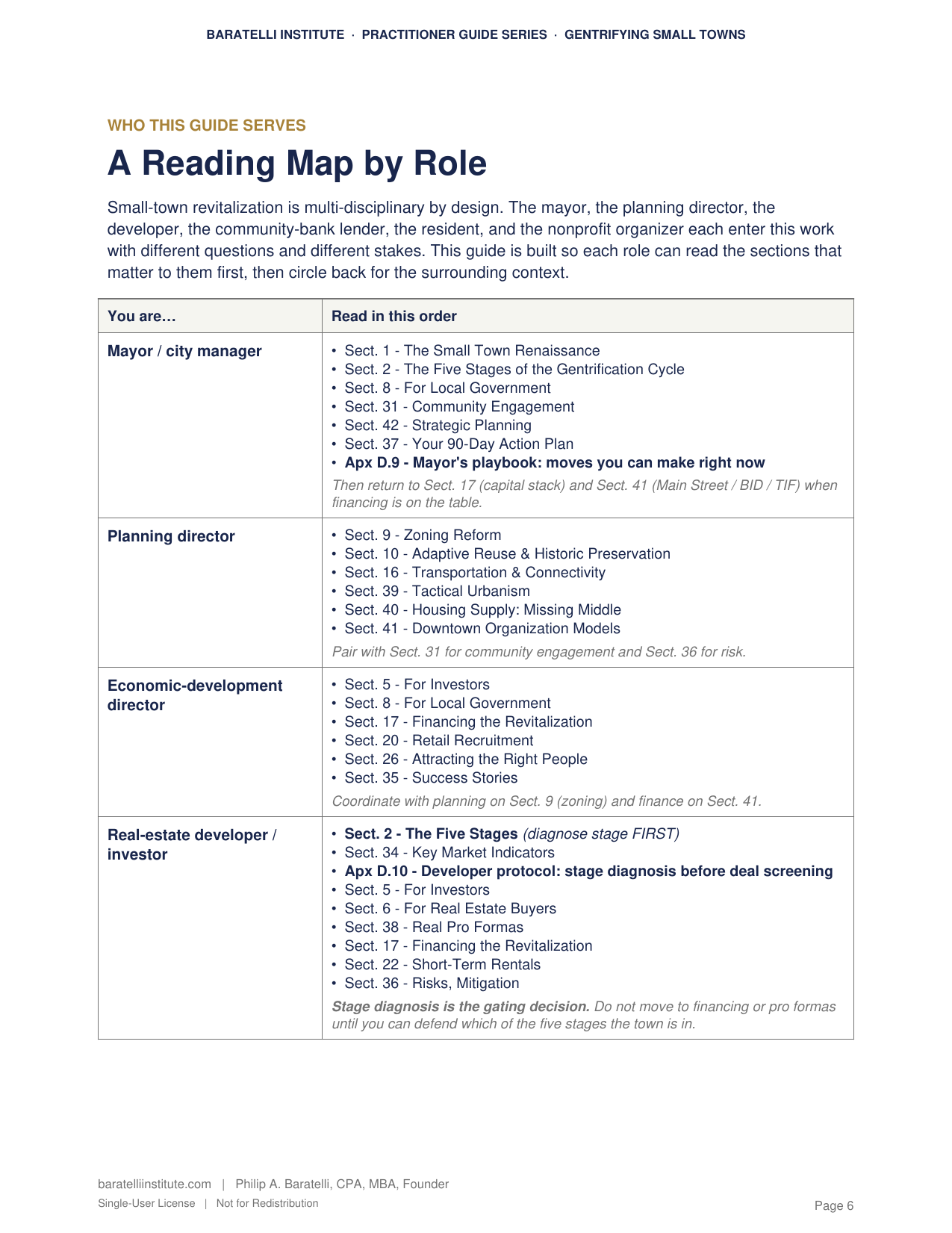
The guide is written for the actual professionals who do this work — and the people who serve them. Each section contains material that will be useful to multiple audiences, but the persona-routing table below tells you where to start.
| You are… | Start with these chapters |
|---|---|
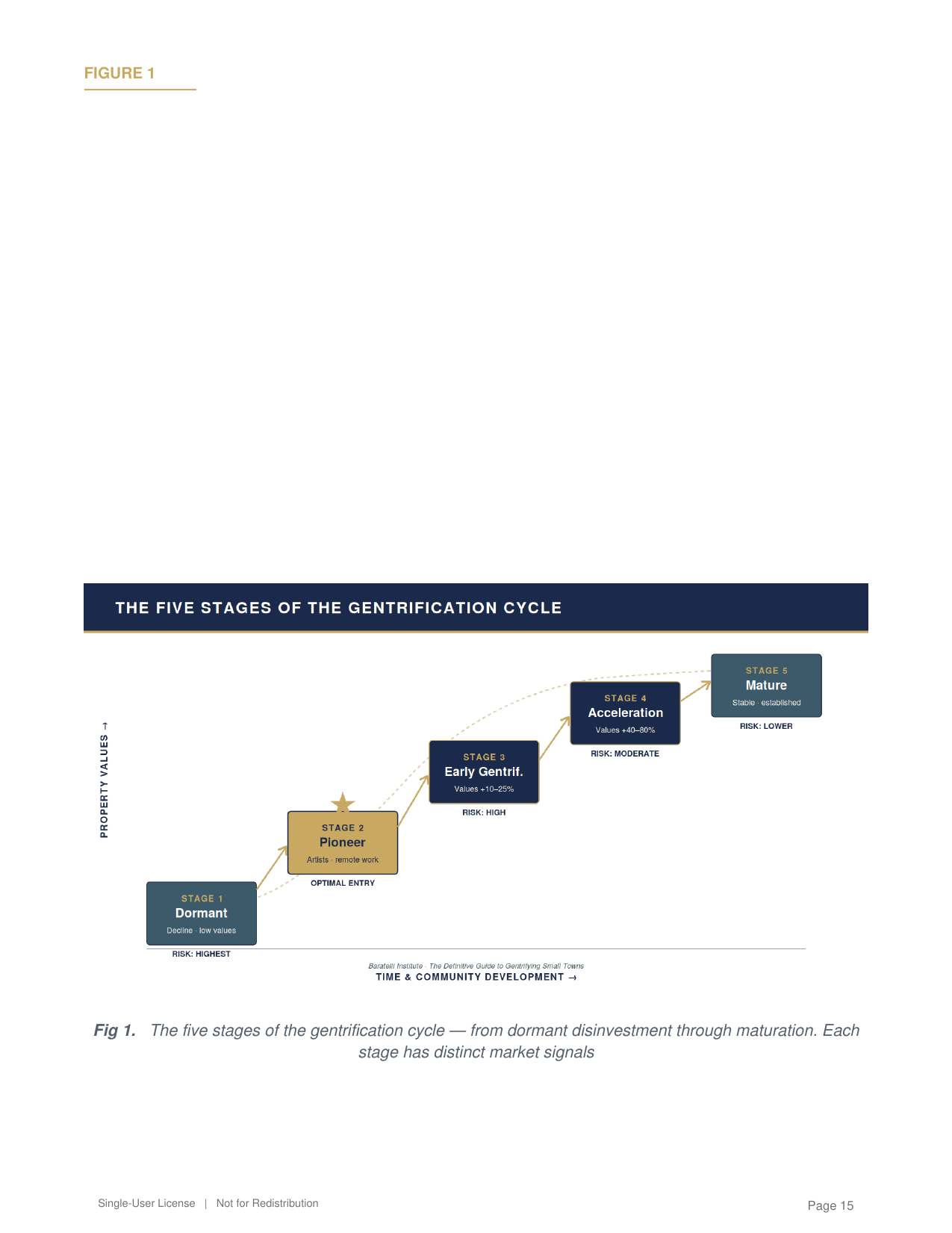
| Town manager / civic CFO running municipal finance | Ch 1 The Five Stages · Ch 3 The Civic CFO Move · Ch 7 TIF Without the Trap · Ch 12 Bond Issuance · Ch 18 Long-Term Resident Protection |
| Mayor or council member making the call | Ch 2 The Mayor's First Move · Ch 5 The PR Announcement Trap · Ch 14 The Developer Conversation · Ch 21 Bentonville Deep-Dive |
| Real-estate developer evaluating the market | Ch 6 The Developer Sequence · Ch 13 Land Acquisition Discipline · Ch 15 Mixed-Use Pro-Forma · Ch 19 The 10-Year Hold |
| Family-office principal placing a civic-anchor donation | Ch 17 The Donor Anchor Decision · Ch 20 The Foundation-Town Relationship · Ch 21-25 (the five town deep-dives) |
| Long-term resident or community group leader | Ch 1 What's About to Happen · Ch 18 Resident Protection · Ch 23 Asheville (what to fight, what to embrace) |
Page counts are approximate.
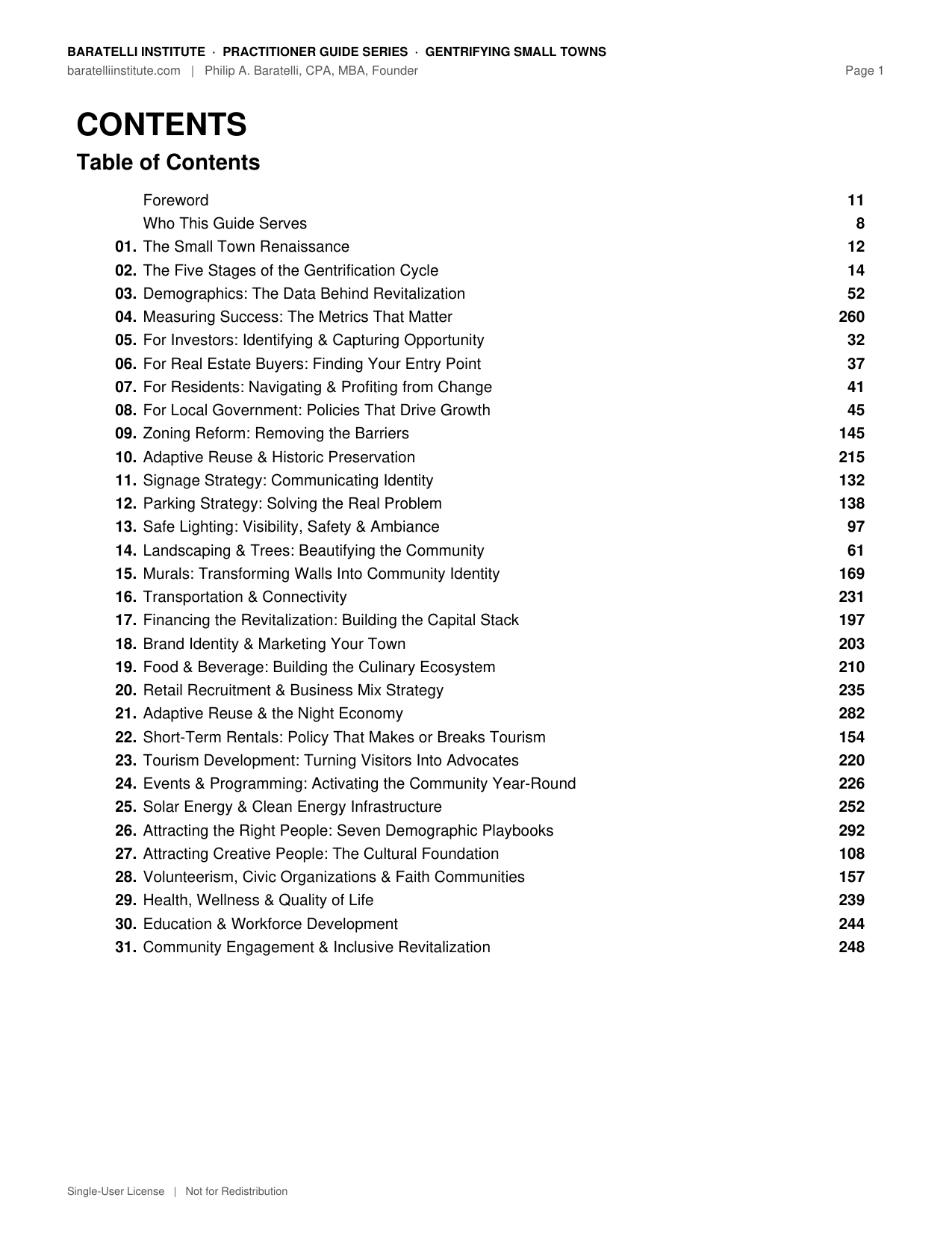
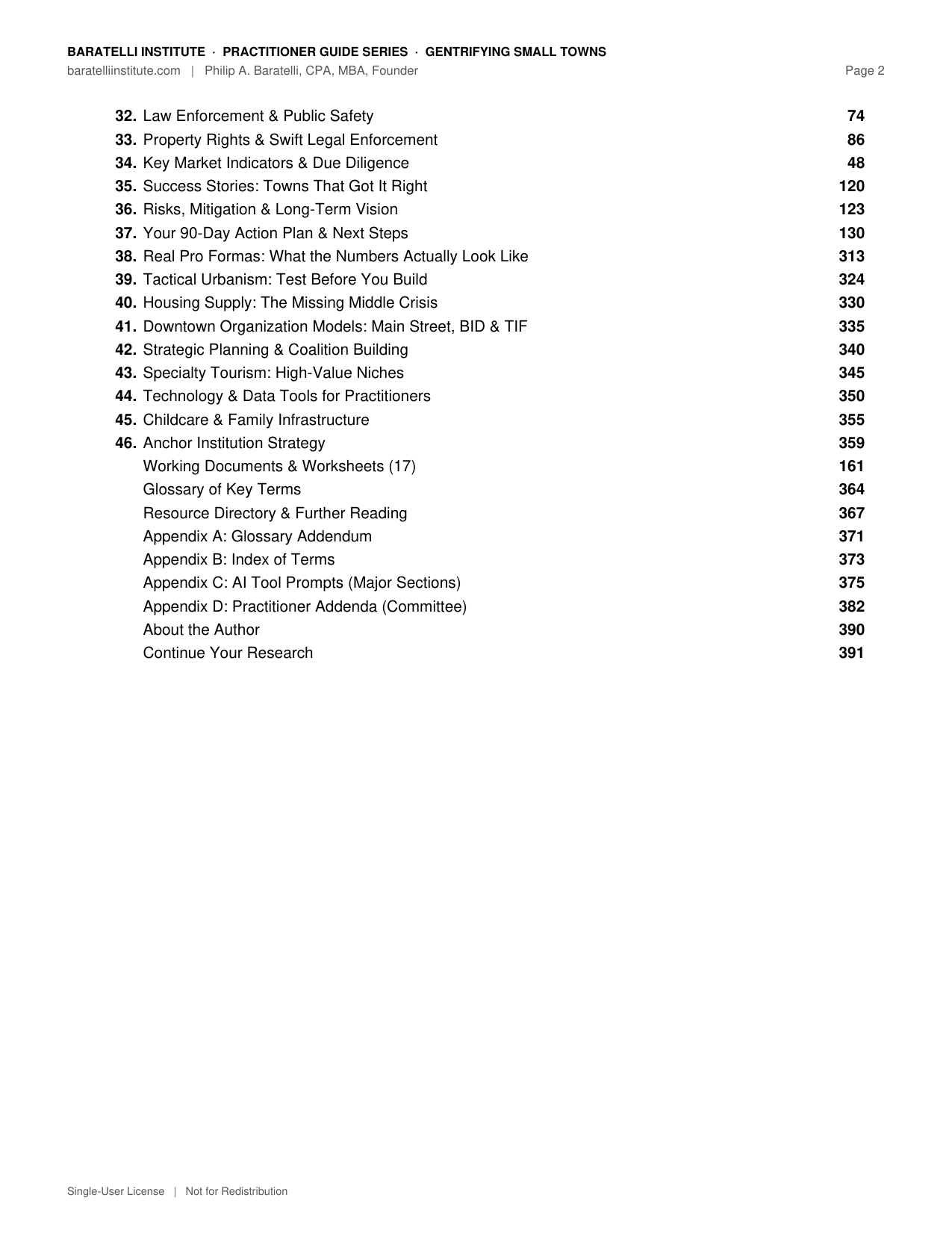
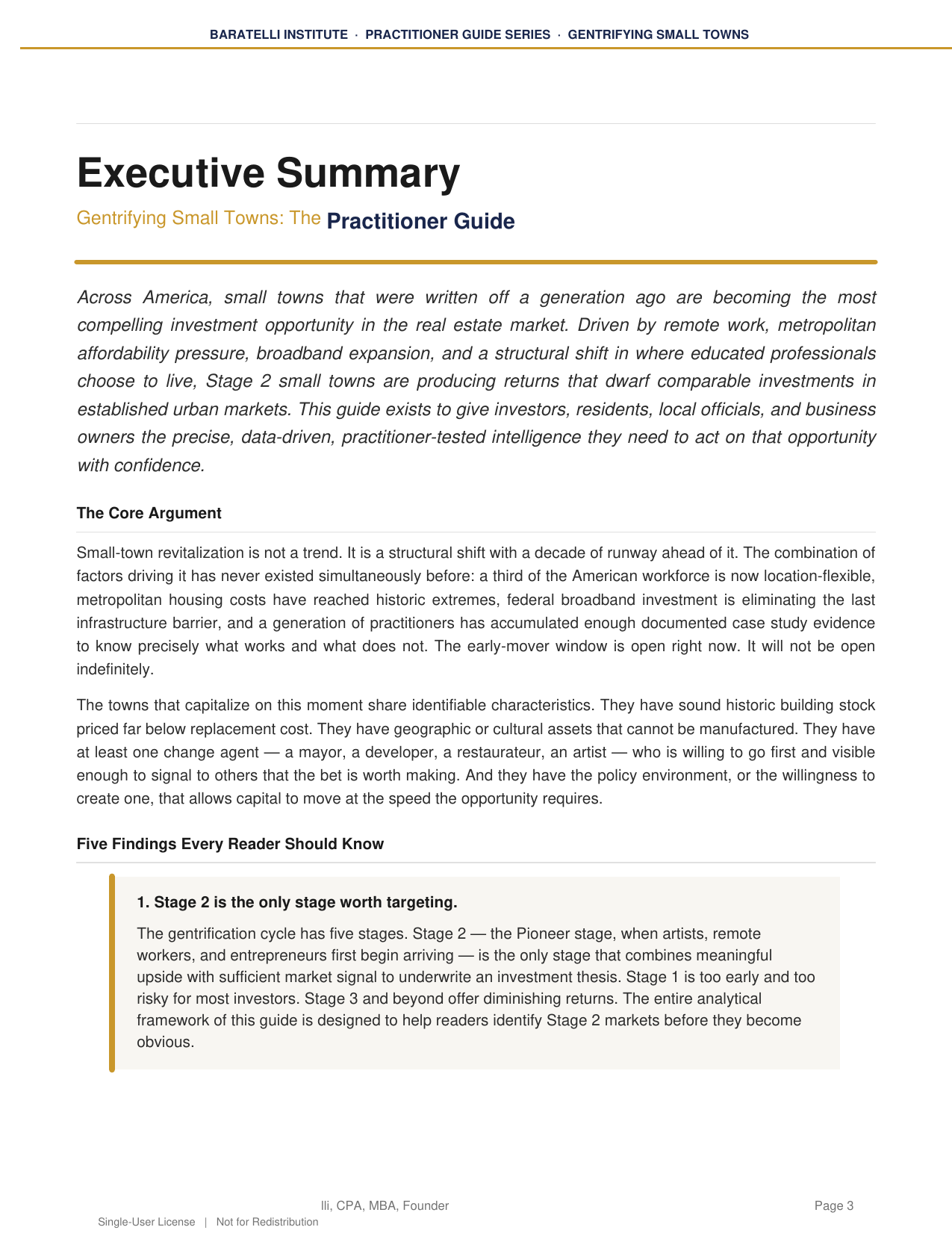
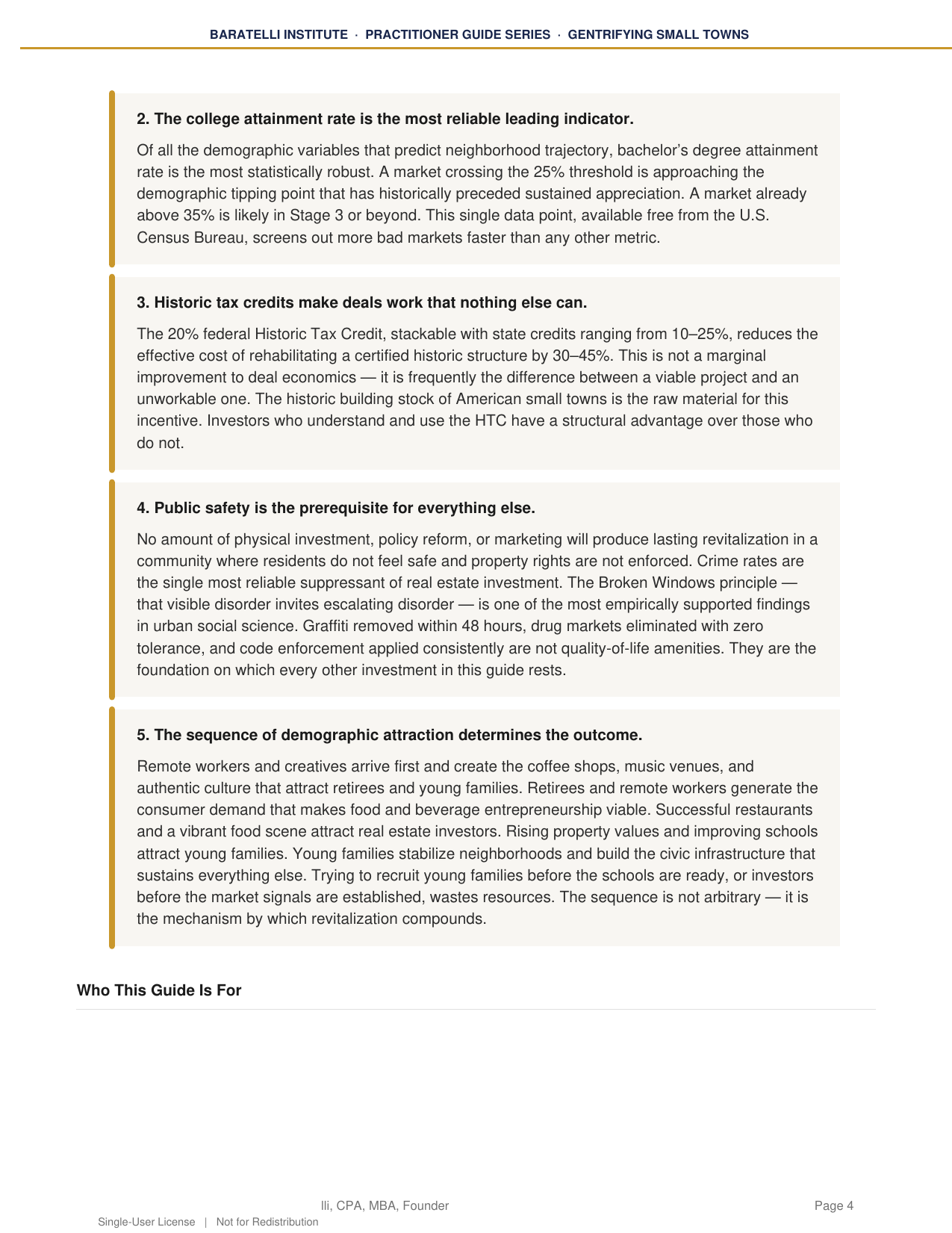
Sample pages from the actual guide — cover, table of contents, persona routing, sample chapter openers, and back matter. These are the actual pages that ship; not marketing renders.
24 chapters + 5 appendices. Searchable, hyperlinked TOC and index. Single-user license.
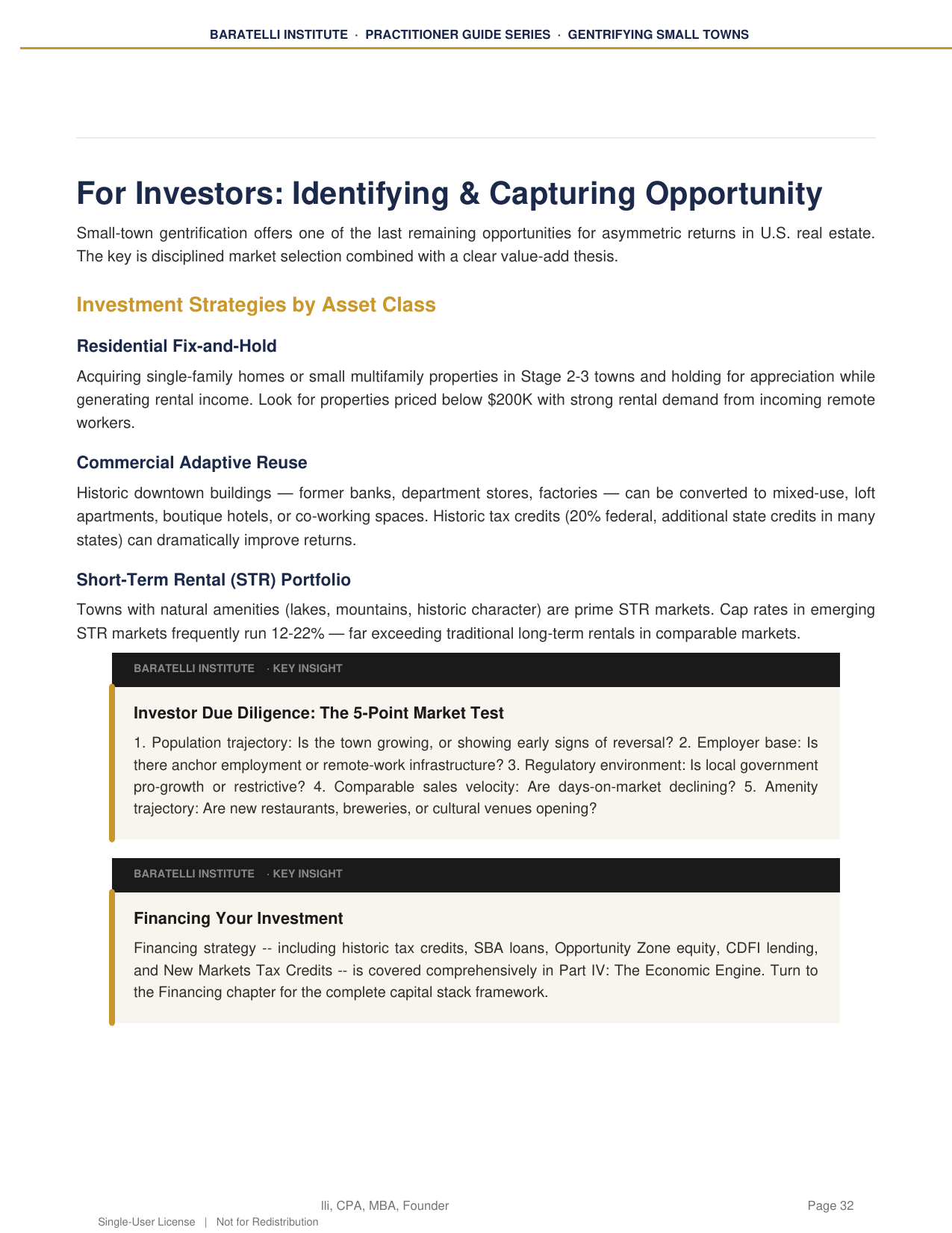
Mixed-use pro-forma model, TIF mechanics + risk model, workforce-housing affordability calculator, civic-bond sizing tracker, and the 10-year-hold cash-flow model for the developer seat.
Bentonville, Greenville, Asheville, Boise, Bozeman. What worked. What didn't. What replicates. What was specific to that geography. Usable as case studies for the civic CFO making the next decision.
For the family-office principal whose gift is going to anchor a new arts district, library, sports facility, or downtown reclamation project. The 12 questions to ask the town before signing.
Free interactive tools at tools.baratelliinstitute.com run the math from the guide on your scenario. No purchase required.
The Guide has gone through an 8-voice civic-finance committee including a sitting town manager (Bentonville-class town), a mayor of a transformation town in year 4, a regional commercial real-estate developer with two completed projects in transformation towns, an opportunity-zone fund principal, a workforce-housing CDFI executive, a Walmart-Foundation-archetype civic donor, and an Andreessen + Horowitz simulated review. Plus a publishing-design committee on the rebuilt B&W book chrome.
Every issue flagged in review has been folded into the text. The guide is in final pre-launch polish.
Want every guide always current + the Brief paid layer + Clarus + monthly office hours?